Skara Brae: Uncovering a Neolithic Village Frozen in Time
Embark on a journey back in time to the windswept coast of Orkney, Scotland, where a village, older than Stonehenge and the Great Pyramids, lay hidden beneath...
- Scotland Tours
- 4 min read
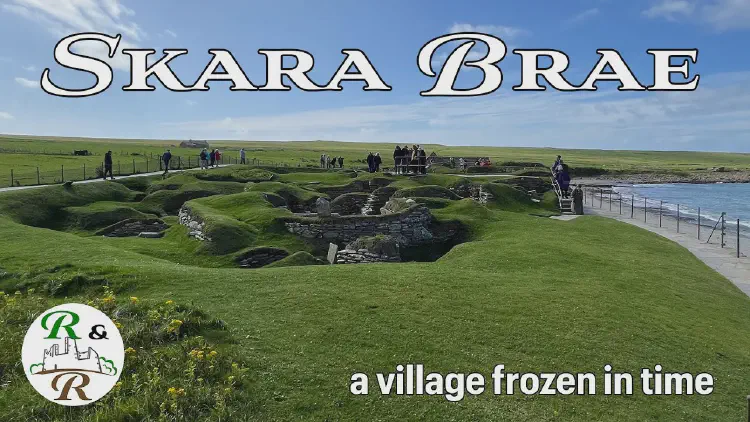
Skara Brae: Uncovering a Neolithic Village Frozen in Time
Embark on a journey back in time to the windswept coast of Orkney, Scotland, where a village, older than Stonehenge and the Great Pyramids, lay hidden beneath the sand for millennia. This is the story of Skara Brae, a remarkably preserved Neolithic settlement that offers an unparalleled glimpse into the lives of its ancient inhabitants.
The story of Skara Brae begins around 3100 BC. For approximately 600 years, it was home to a community of farmers, hunters, and fishermen. Life thrived in this cluster of stone dwellings until it was abandoned and gradually consumed by the shifting sands. For thousands of years, its existence was forgotten, a secret kept by the earth.
It wasn’t until a great storm in 1850 that this lost world was revealed. The powerful winds and waves tore away the turf and sand, uncovering the stone structures beneath. Because it was buried for so long, the village is in a remarkable state of preservation, even retaining some of its original stone furniture.
The village consists of nine houses, all constructed from flat stones and ingeniously connected by covered walkways. Originally, the settlement was not coastal but situated inland, beside a freshwater loch. This map illustrates the clustered, communal layout of the dwellings, protected from the harsh Orkney elements.
Archaeologists believe Skara Brae was built in two main phases. While much of the first phase remains a mystery (as it would require dismantling the later, visible structures), we can still see the evolution of the settlement. The earliest houses feature a similar plan to the later ones, with one key difference: the box-beds are built directly into the thick walls rather than protruding into the main living space.
Of all the dwellings, House 7 is the best preserved. Its condition is so exceptional that a full-scale replica has been created nearby to give visitors a true sense of what life was like inside these ancient homes. We’ll take a look inside that replica later in our tour.
Access to the sunken houses was through a network of stone-lined passages. These were originally roofed over, creating tunnels that offered vital protection from the wind, rain, and cold, especially during the harsh winter months. This design demonstrates the community’s sophisticated adaptation to their environment.
Each house was secured with a door made from a large stone or wooden slab. These could be barred from the inside using a piece of wood or whalebone, ensuring safety and privacy for the occupants.
One building stands out from the rest: the workshop. This is the only structure in the village that was not a house. While it contains a central hearth, it lacks the characteristic beds and dressers found in the homes. Excavations here unearthed fragments of stone, bone, and antler, suggesting it was a place where tools, such as pins and axes, were crafted for the community.
The houses at Skara Brae share a remarkably consistent design. Each consists of a large square room with a central fireplace for warmth and cooking. On either side are stone-built beds, and opposite the doorway stands a distinctive, shelved stone dresser. This dresser was likely a place of pride, used to display important or cherished objects, and was the first thing a person would see upon entering the home.
The exact reason for Skara Brae’s abandonment around 2500 BC remains a mystery. One compelling theory is that a catastrophic storm buried the village in sand, forcing the inhabitants to flee suddenly. Another suggests a more gradual change, as the climate became colder and wetter over time, making life in the settlement increasingly difficult and prompting the community to move on.
To fully appreciate the ingenuity of Neolithic life, we can now step inside the modern reconstruction of House 7. This replica brings the past to life, showing how these stone structures provided a cozy and functional living space.
Inside, we see the central hearth, the heart of the home, which would have provided light, warmth, and a place to cook. The replica is furnished with items based on archaeological finds, including pottery, animal skins for bedding, and woven baskets, giving a vivid impression of the domestic environment.
The iconic stone dresser is fully realized here, displaying the types of possessions the villagers might have owned. Seeing it in context highlights its importance as the focal point of the room, a testament to the creativity and house-proud nature of the people who lived here over 5,000 years ago.
A visit to Skara Brae is more than just a tour of ancient ruins; it’s a profound connection to a distant past. This village, frozen in time, continues to captivate and educate, reminding us of the resilience and ingenuity of our Neolithic ancestors.